



 Fatima MahfoudContent Writer
- 10 min read
- Careers

Contents:
If you're applying for a job, you need to design a professional resume as it's a fundamental step to ensure you stand out from others in this highly competitive world. It's a summary of your skills, achievements, and experiences, and your opportunity to promote yourself.
In our article, we'll cover the importance of a resume and its essential sections, and provide you with the best tips that will help you stand out from hundreds of other applicants. If you're ready, let's begin.
First: The importance of writing a resume for a job:
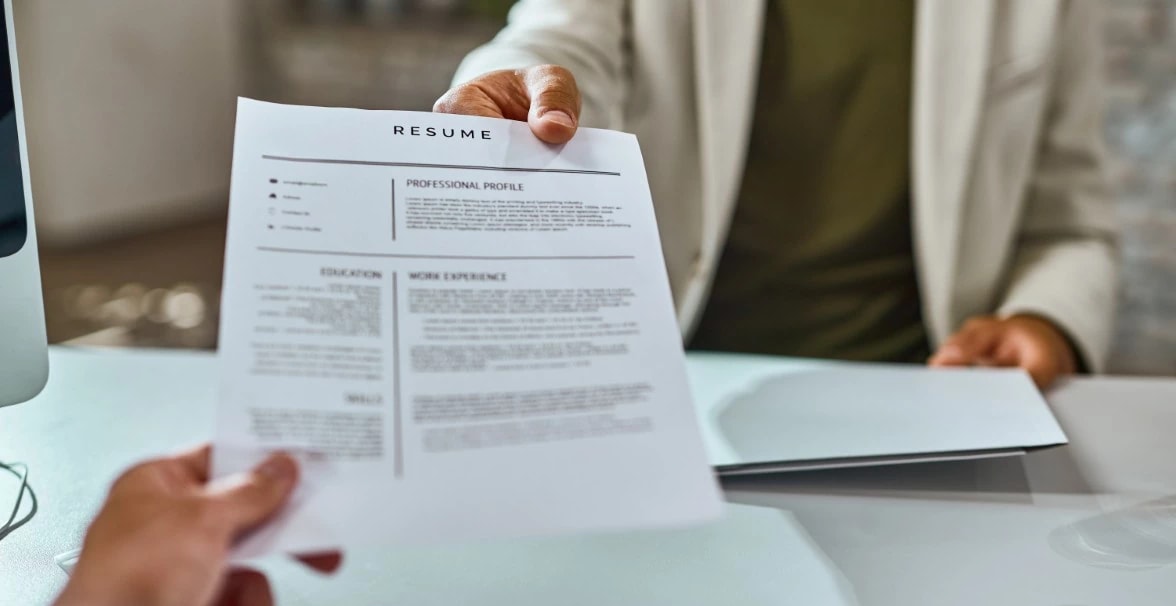
The resume is the first contact between you and the potential employer, and it will determine whether you qualify for an interview or not. Therefore, designing a professional resume will help you:
- Attract the attention of hiring managers
- Highlight your skills and experience clearly and organized
- Show your professionalism and attention to detail
- Increase your chances of getting a personal interview
- Increase your chances of getting the job
Your resume is your personal document.
Second: Essential sections for designing a professional resume:
A professional resume should contain several essential elements. These elements ensure your resume is comprehensive and appropriate for the job requirements you're applying for. Here are the most important ones:
Personal Information:
- Initially, it's important for you to start with your basic personal information, such as:
- Full name
- Address
- Phone number
- Email (preferably professional)
- Link to your LinkedIn profile
Contact Information:
This information should appear at the top of your resume and should include your name, phone number, postal address (whether work or personal), and professional email address.You may want to draw attention to this information by slightly changing the formatting, alignment, or font, but don't overdo it.
Career Objective:
The career objective is a short paragraph where you summarize your professional aspirations and what you hope to achieve through the job you're applying for. The career objective should be concise and focused, reflecting how suitable you are for the job.
Education and Qualifications:
- In this section, mention your academic qualifications. You can add this after the introduction if you're at the beginning of your career or don't have much work experience. Whatever request you choose, you'll need to include:
- University name and degree obtained
- Your field of study, major and minor, and graduation year
- Don't include anything before your bachelor's degree
- We advise you that if you have a lot of work experience, this section is organized in reverse chronological order, so that the newest (or highest) degree you've obtained or the degree you're still studying appears first.
Work Experience:
- This section is considered one of the most important parts of the resume. Mention your previous work experiences in reverse chronological order (from newest to oldest). For each job, include:
- Team name
- Job title
- Work period (from - to)
- Main responsibilities and achievements assigned to you
- Include work experience related to your academic work, interests, and development only
Your Skills:
- Here you can highlight the skills you possess that fit the job. Skills can be divided into:
- Technical skills (such as mastering specific software or programming languages)
- Personal skills like teamwork
Training Courses and Certifications:
If you've worked on developing your skills in areas other than your studies, and if you've obtained training courses in various fields or recognized certificates, mention them in this section of professional resume design. This enhances the strength of your resume and shows your professional development.
Work History:
- If you've previously worked in a job for an entity, include details of any work training, volunteering, or paid jobs you've done. List the most recent experiences first. This paragraph should include:
- Employer name
- Job title
- Dates you worked there
- This paragraph should not exceed 2-3 lines.
Languages You Master:
Include any languages you know with specifying your proficiency level for each language (beginner, intermediate, advanced, or professional). If appropriate for your field, this may include foreign languages in addition to computer languages.
Third: Top Tips for Designing a Professional Resume:
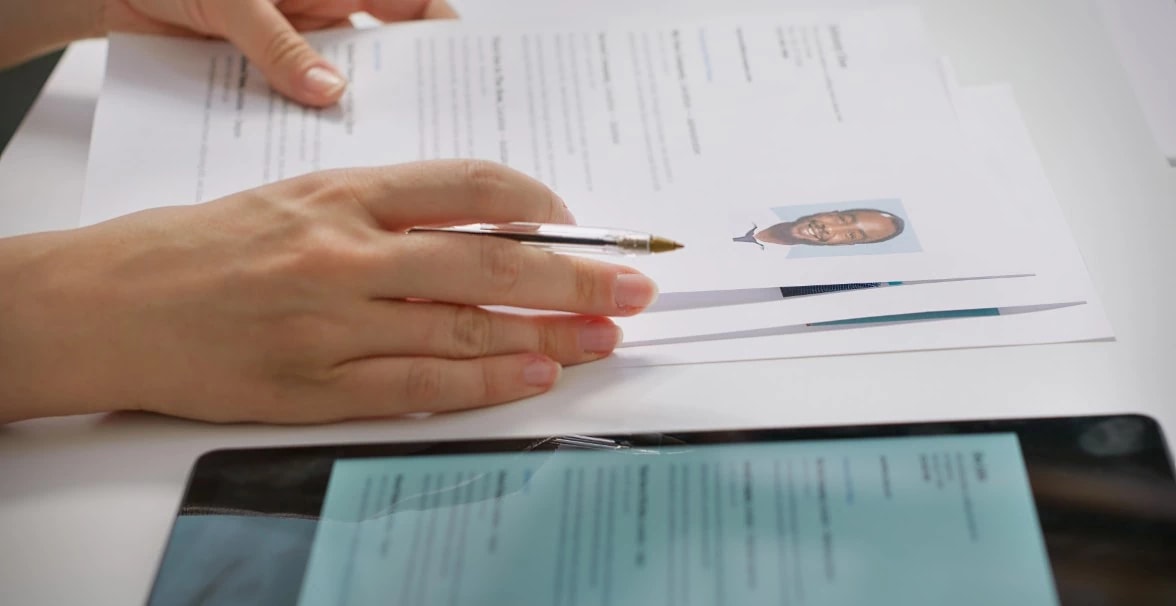
After learning about the basic sections of a resume, I'll give you the most important tips that will help you in designing a professional resume:
Formatting and Design:
- Since your priority is to design an attractive resume that catches employers' attention, you should maintain simplicity, clarity, and ease of browsing. To achieve this, follow the following:
- Use a clear, professional font like Arial or Times New Roman in size 10-12.
- Adjust the margins to be no less than 0.5 inches on all sides.
- Balance the text, pay attention to where information clusters and where the page is empty, and try to distribute these elements so that the information is clear.
- Be consistent and organized. For example: If you choose to write one section title in bold, write all section titles in bold.
- Make sure the spacing between paragraphs is equal.
- Be clear and use subheadings for paragraphs.
- Don't use flashy colors and decorations as they distract the reader.
- Be smart about where page breaks occur. For example: Don't leave a section title isolated alone at the bottom of one page and continue writing on the next page. If you have an option in an electronic application, upload your resume as a .pdf file.
Conciseness and Clarity:
Try not to exceed one or two pages maximum for your resume.Use short, clear sentences.Focus on achievements and numbers that show your impact in previous jobs, such as increased sales and increased reach of products or services.
Customization by Job:
- You may have diverse skills - you might be a marketer with SEO skills. Present your resume to match the job vacancy. That is, mention the skills that fit it. Don't submit the same resume for all jobs. For example, the resume for a digital marketing job differs from the resume for another job, so follow the following:
- Modify your resume to fit each job you apply for.
- Focus on the skills and experiences you have that are most relevant to the advertised job.
Use Keywords:
If you're applying for a job or work online, use the keywords that appear in the job description, which helps pass automatic filtering systems (ATS), and helps you increase visits to your personal resume website.
Resume Review:
After you design a professional resume, read it slowly and completely. Think critically about the content and make sure it's clear, organized, and structured, and make sure your grammar is flawless. Ask people you trust for their opinions to look at your resume, be open to criticism, and make changes to your document based on their recommendations if you're convinced by them. In addition to getting feedback from experts in your field.
Additional Tip:
Your resume will change and grow with your career, so it's important to get used to updating your resume regularly. For example: If you learn a new skill or successfully complete a major project in your current job, update your resume to reflect that. Find a way to track your additional experiences so that when it's time to submit your new resume, it's ready. For example, you can keep a resume folder on your computer where you can directly add details about new work and achievements.
Fourth: Common Mistakes in Resume Writing:
To avoid making mistakes that may affect your chances of getting the job, here are some common mistakes to avoid:
Lengthiness:
There's no one-size-fits-all; the length of your resume depends on your experience. One of the great tips for designing a professional resume is that you should be able to show your skills, experiences, and future potential to the reader. If you can do that well in one page, one page will be great. If your experiences and skills are extensive and don't fit on one page, the average resume length is usually about two to three pages. However, keeping your resume to two or three pages helps the hiring manager absorb your experience more effectively. Make sure the first page contains the most important information about you and makes a real impact. The second page is also important, and if you've reached the third page, use it for less important information such as hobbies, interests, and reference sections.
Poor Formatting:
Resume formatting gives the first impression to recruiters when reading your application. So if the formatting isn't good, they'll judge that you're not good for the job no matter how strong the content is. Therefore, it's important that your resume is formatted so it can be quickly absorbed. The template should be eye-catching but not cluttered.
Including Incorrect Information:
It's easy for recruiters to verify the facts in your resume, so never assume that hiring managers won't ask you to do so. At best, your lies will be obvious and your resume will be rejected. All information on your resume should be correct so you don't embarrass yourself. You might be invited for an interview and be asked questions you can't answer and be rejected because you tried to lie and cheat.
Lack of Evidence for Your Skills:
Not proving your skills, achievements, and experiences can be a big mistake. Because without this information, the employer cannot trust your ability to do the job effectively.
Lack of Customization:
Your resume is a marketing tool, and all marketing forms should be customized for the entity you're submitting your resume to. It's wrong to use the same resume for all jobs.
Ignoring Gaps in Work History:
Gaps in work history are common. For example: If you worked for an entity and stopped for a period then resumed work in the same entity or another, they rarely pose a problem as long as they're explained. Don't be afraid to tell recruiters that at some point you weren't working. Tell them your situation, such as taking some time to care for a parent or travel. There's also no shame in informing employers of a period you spent away from work due to illness or other reasons.
Spelling Mistakes:
Never leave writing your resume to the last minute. Use spell check functions in programs like Microsoft Word. So check everything that indicates lack of attention to detail.


Advice from Dopa Tech for you:
Hiring committees may receive hundreds of applications for one job, and their time is limited. So make sure your resume is as clear and targeted as possible. It should be designed, formatted, organized, and readable according to the specific expectations for this position.
Designing a professional resume is not just a writing process, but an art that reflects your personality and skills. We guarantee you that if you follow the steps and tips mentioned in this article, you'll be able to create a resume that attracts employers' attention and increases your chances of getting the job you dream of.
How to write a resume or how to create a portfolio are your gateway to the world of work, so invest your time and effort in making them perfect. Include all technical skills, or hard skills, and soft skills, and it's very important to maintain your integrity. Make sure anything you include in your resume is accurate and will stand up to questioning in the interview.
We also advise you to keep your resume constantly updated, as this prevents you from forgetting key points when you need them most. And makes you more aware of any skills or gaps in experience you have.
It's not wrong to feel confused about how to design a professional resume, especially if you don't have much work experience. But with Dopa Tech, it will become easy. We'll help you determine what your resume should say and make it formatted and organized. If you wish, we can help you with how to create a portfolio and put you on the path to your dream career.
Don't hesitate to contact the Dopa Tech team to turn your ideas into reality.
Frequently asked questions
A resume is a summary of your skills, achievements and experience, and it is the first contact between you and a potential employer, deciding whether you qualify for an interview. A professional resume helps you attract hiring managers, present your skills clearly and increase your chances of getting the interview and the job.
A professional resume includes personal and contact information, a career objective, education and qualifications, work experience listed from newest to oldest, technical and personal skills, training courses and certifications, work history, and the languages you know with your proficiency level in each.
The length depends on your experience, and ideally a resume should not exceed one or two pages. If your experience and skills are extensive, it can run to two or three pages, as long as the first page holds the most important information and a third page is kept for less important details like hobbies and references.
Use a clear, professional font such as Arial or Times New Roman in size 10 to 12, keep margins of at least 0.5 inches, and stay consistent with section titles and paragraph spacing. Avoid flashy colours and decorations because they distract the reader, and upload your resume as a PDF when you have the option.
No, sending the same resume to every job is a common mistake. Tailor your resume to each position, focus on the skills and experience most relevant to it, and use the keywords from the job description to help you pass automatic filtering systems (ATS).
Didn't find your answer? Our team is ready to help.
Contact us